
Hey bro, I’m back! If you’ve already read the first part and figured out how the laws and medicine work in Poland, it’s time to dig deeper. Because cannabis isn’t just articles in the criminal code and pharmacies with prescriptions.
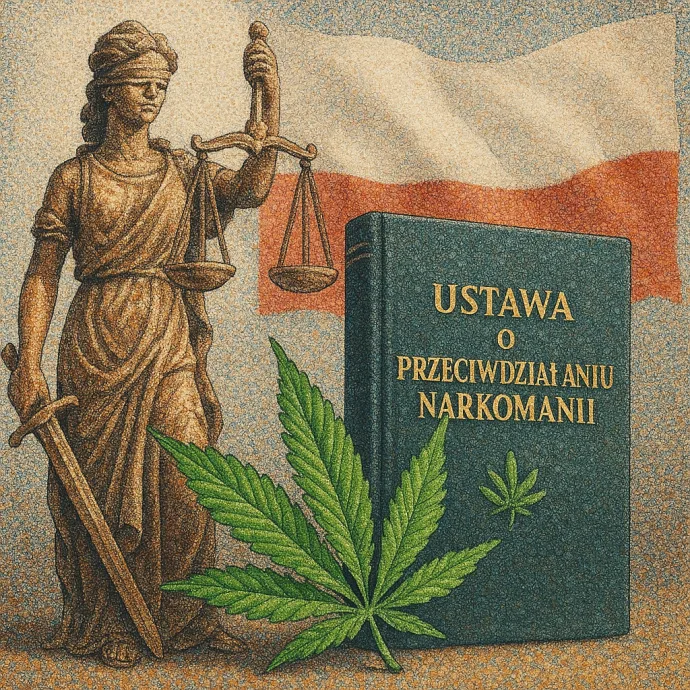
If you like watching cannabis culture take shape in countries on the verge of legalization, Poland will definitely surprise you.
Culture and subculture: traditions, slang, and the influence on music and lifestyle
Historical roots and traditions
Hemp has long been part of Polish rural culture. Thousands of years ago, wild hemp was already spreading naturally across what is now Poland. Echoes of this survive in folklore: for example, in some regions hemp seeds were scattered during the Kupala Night festivities as a symbol of fertility. After the 20th-century bans, the legal traditions were cut off, but hemp was never demonized in popular memory — it remained “our own, native herb,” just illegal now.
Slang and language
Polish has a rich cannabis slang, especially among young people. Being high is described with words like “zjarany” (burnt) and “na haju” (high, buzzed). Having such an extensive vocabulary shows that cannabis products have firmly entered everyday youth life.
Music and art
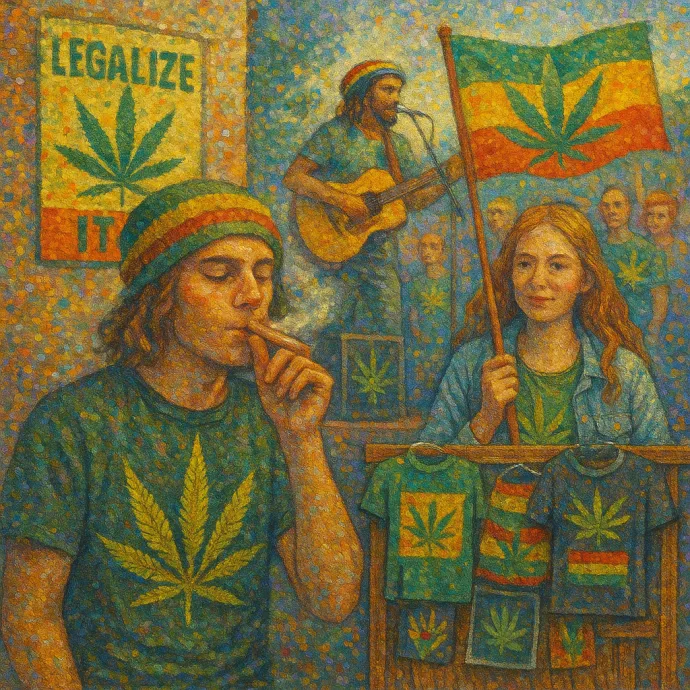
Weed has noticeably influenced some strands of contemporary Polish culture. Starting in the 1990s, with the rising popularity of reggae and rap, references to marijuana began to appear in Polish artists’ lyrics. A subculture of “rastamani” took shape — Polish Rastas inspired by Jamaican music and ideology, for whom cannabis became part of their worldview. Contemporary graffiti artists and illustrators often use the cannabis leaf in their work as a symbol of freedom or nonconformity. For example, at street art festivals you can come across stands with paintings that weave in a stylized “marihuana” leaf.
Lifestyle and paraphernalia
Themed festivals and events have appeared: for more than 20 years now, the Cannabis Liberation March (Marsz Wyzwolenia Konopi) has been held every year in major cities — a peaceful pro-legalization demonstration accompanied by concerts and performances. Hundreds and thousands of people turn up, many wearing clothes with cannabis symbols. Among young people, it’s trendy to show you’re in the know: April 20 (4/20) is celebrated as an informal “cannabis day,” and on that day the Polish corner of social media is full of joking posts on the subject. Still, open cannabis culture isn’t as visible as it is in, say, Holland — because of the legal risks, most of its expression is symbolic. The influence also shows in the trend toward eco-friendly hemp products: young designers offer clothing made from hemp fabric and cosmetics with hemp oil, marketing it all as part of a “natural lifestyle.” So bud in Poland is about subculture, music, lifestyle and even business (semi-legal for now, or legal in the case of industrial hemp).
Activism and political initiatives: the reform movement
Civil society organizations
Several non-governmental organizations in Poland advocate for cannabis policy reform. The best known is “Wolne Konopie” (which means “Free Hemp”). The movement emerged in the mid-2000s and brings together activists, lawyers, scientists and patients. “Wolne Konopie” organizes the annual pro-legalization marches mentioned above, runs educational campaigns and spreads information about the medical benefits of cannabis. They have also launched a number of petitions and citizens’ bills. Another NGO, “Społeczna Inicjatywa Narkopolityki (SIN),” focuses on harm reduction and sensible drug policy in general, but it also supports decriminalizing weed. Activists regularly work with MPs to get issues onto the agenda. In 2020, the Sejm even had a temporary “Parliamentary Group on a Marijuana Legalization Bill,” made up of MPs from different factions who wanted to move the issue forward. Although that attempt didn’t lead to immediate changes, it showed that, thanks to pressure from below, the topic was no longer taboo.
Public figures for legalization
Many public figures have also spoken out in support of reform. Among politicians, early supporters included the already mentioned Janusz Palikot, Robert Biedroń, Janusz Korwin-Mikke and others. From the arts and culture world, there’s director Agnieszka Holland, actress Magdalena Cielecka, and musicians Zbigniew Hołdys (of the legendary band Perfect) and Stanisław Soyka — all of them signed open letters calling for policy change in the 2010s. From the scientific community, Professor Jerzy Vetulani (a neuroscientist) stood out, actively promoting the idea that criminalizing cannabis is harmful and not backed by scientific evidence. Authoritative voices like these reduced the stigma around the topic. At the same time, church and conservative organizations have traditionally opposed reform, seeing liberalization as a threat to moral foundations. The Catholic Church in Poland has repeatedly stated that legalizing marijuana is a step in the wrong direction, and an especially dangerous one for young people.
Political processes
As noted, there have been several parliamentary attempts to soften the law over the past decade. In 2011, the discretion amendment (not prosecuting small amounts) passed under pressure from the public and some liberal politicians. In 2016, the Kukiz’15 party (on whose behalf Liroy-Marzec acted) introduced a medical marijuana bill, and after a broad public campaign it was approved almost unanimously (440 “for” and 2 “against”) — a rare case of consensus. Now, with the new coalition (liberals, centrists and the left) in power, hopes are reviving. This is also backed by the leader of the coalition’s largest party, Donald Tusk, who said in 2023 that the issue should be resolved in favor of common sense, not repression. Some young MPs are calling for going a step further — creating a regulated market (following the example of Malta or, partly, Germany). One way or another, civil society and the relevant movements (including Wolne Konopie) will keep up the pressure until the law is liberalized.
Legal hemp products
It’s used to make a wide range of goods: textiles, building materials, cosmetics, food products (seeds, oil), animal feed and so on.
By the end of 2024, Poland had more than 200 pharmacies where medical cannabis can be ordered with a prescription (as a rule, they’re spread across the country but concentrated in big cities). Usually packages of 5 or 10 g are dispensed, which the patient then uses at home. Using it right at the pharmacy is not allowed. Private “cannabis clinics” have also appeared, where, for a fee, specialists consult patients and write a prescription if they have the relevant symptoms (say, chronic pain, anxiety disorder, insomnia). These clinics advertise their services online, offering quick consultations. It was through them that a significant share of patients gained access to medical cannabis products. After the rules were tightened in 2024, the clinics switched to in-person appointments but kept operating. Overall, the pharmacy segment is tightly controlled: every prescription is registered in an electronic system, and doctors can’t prescribe an excessively large amount at once (no more than a 90-day supply).
The history of the situation: a timeline of key changes
For clarity, here are the main stages in the history of cannabis regulation in Poland, laid out as a timeline table:
- 1920s. Poland signs the International Opium Convention (1925), committing to restrict the drug trade, including weed. The 1928–1930 law mentions hemp as a harmful substance for the first time.
- 1951. In communist Poland (the PRL), cannabis is officially added to the list of narcotics. Production and trade are illegal, but possession/use is not yet criminalized.
- 1970s–80s. The PRL’s harsh drug policy: cannabis is prosecuted in practice, although there is no separate article for possession. Use remains low and marginal.
- 1997. A new Act on Counteracting Drug Addiction is passed. Possession of narcotic substances (including weed, for the first time) is criminalized — up to 3 years in prison. The early 2000s are marked by repressive enforcement: thousands of young people are convicted for possessing even a gram of weed.
- 2005. The legislation is refined (a new version of the law dated July 29, 2005). Ganja remains on the list of strictly prohibited substances (Schedule I-N).
- 2011. Amendments to the law (in force from December 9, 2011): an option is introduced not to prosecute possession of a small amount for personal use. Prosecutors/courts gain the right to close a case if the offense is minor. At the same time, penalties for large quantities and dealing are toughened (the maximum for “significant amounts” is raised to 10 years). This compromise became the first partial decriminalization.
- 2017. A historic decision: medical cannabis is legalized. On July 7, 2017, the Sejm adopts amendments allowing cannabis to be used for medical purposes. From November 1, 2017, doctors can write prescriptions and pharmacies can dispense cannabis as a raw material for medicines. Poland joins the countries that recognize the therapeutic value of cannabis.
- 2018. Medical cannabis starts being used in practice — the first pharmacies begin preparing it from imported raw material by the end of 2018.
- 2022.
- 2023. For the first time, Poles will be able to get “Made in Poland” medical marijuana.
Conclusion
As you can see, bro, Poland has come a long way in how it treats cannabis — from complete legality in earlier times, through harsh criminalization at the end of the 20th century, to a gradual softening of positions today.
“Medicine” is already firmly integrated into the healthcare system, and further reforms may allow “recreation” too, given the European context and public pressure. We’re seeing a more balanced approach take shape, one focused on common sense and public health, which may eventually lead to dropping repression against weed altogether.
Yes, cannabis culture in Poland isn’t as open yet as in Spain or Germany. But it’s precisely in countries like this that the most resilient movements are being born right now — not from the top down, but from the bottom up. Through music, art, activism, through new MPs and bold civic initiatives.